



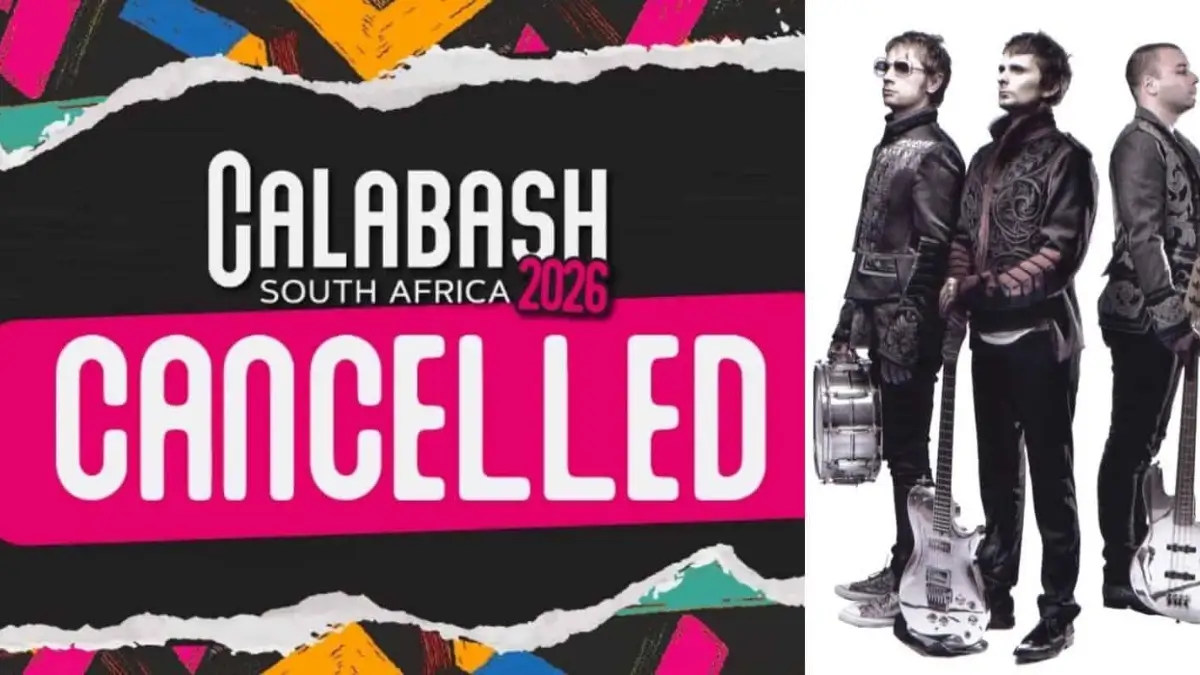
South Africa’s live music calendar took a major blow in January 2026 when organisers confirmed the cancellation of Calabash South Africa 2026, one of the most anticipated international music festivals scheduled for the year. The announcement sent shockwaves through the local music community, particularly in Gauteng, where thousands of fans had been preparing to descend on FNB Stadium for what promised to be a landmark event.
With global headliners, stadium-scale production, and a rare mix of rock and alternative acts, Calabash 2026 was positioned as a cultural moment for South African live entertainment. Instead, it has become a case study in how quickly large-scale events can unravel when international touring plans collapse.
This is what happened, why it matters, and what ticket holders should do next.
ALSO READ: Gautrain Travel Guide for Calabash South Africa 2026: How to Get to FNB Stadium Easily
What Was Calabash South Africa 2026 Meant to Be
Calabash South Africa 2026 was scheduled to take place on 7 February 2026 at FNB Stadium in Johannesburg and 11 February 2026 at DHL Stadium in Cape Town. The festival was promoted as one of the biggest live music events to hit South Africa in years, with British alt-rock giants Muse announced as the headline act.
Supporting acts included internationally recognised names such as A Day To Remember, Simple Plan, and Nothing But Thieves, making the line-up particularly attractive to rock and alternative music fans who rarely get to see multiple global acts in one local setting.
For Gauteng audiences, the Johannesburg leg was especially significant. Major stadium concerts have become increasingly rare due to rising costs, logistics, and global touring pressures. Calabash was meant to signal a renewed confidence in South Africa as a viable stop on international touring circuits.
Why Calabash South Africa 2026 Was Cancelled
The primary reason for the cancellation was the withdrawal of Muse, the festival’s headline act. Organisers confirmed that the band pulled out of their broader international tour, which included planned shows in South Africa, the United Arab Emirates, and India.
In a statement issued by the band, Muse explained that the decision was due to “unforeseen circumstances beyond our control.” While no specific details were provided, the wording is consistent with logistical, scheduling, or health-related complications that often affect large-scale international tours.
According to festival organisers, once Muse withdrew, the scale of the problem became impossible to solve in time.
“The logistics involved in presenting a touring festival of this size made it impossible to secure a suitable replacement headliner at such short notice,” the organisers said in an official statement.
Without a headliner capable of filling stadiums in Johannesburg and Cape Town, the entire festival structure collapsed. Unlike smaller concerts, Calabash relied heavily on a single global act to anchor ticket sales, sponsorships, and production commitments.
Why Finding a Replacement Headliner Was Not Possible
From the outside, it may seem surprising that organisers could not simply book another international artist. In reality, replacing a stadium-level headliner is one of the most difficult challenges in live entertainment.
Artists capable of selling out venues like FNB Stadium are booked years in advance, often with tightly coordinated global schedules. Short-notice replacements must align with availability, production requirements, travel logistics, and contractual obligations across multiple countries.
Industry insiders note that even if a suitable artist were available, renegotiating contracts, visas, freight, and staging within weeks is often financially and operationally unviable.
In this case, organisers confirmed that despite efforts to find alternatives, no replacement could be secured without compromising the event’s scale and quality.
Refunds, Ticketmaster, and Fan Confusion
One of the most contentious aspects of the cancellation has been the way refunds were communicated.
Many fans reported receiving refund notifications before an official public announcement was made. This led to confusion and speculation that the event had been quietly cancelled before fans were formally informed.
According to organisers, all ticket holders will receive full refunds, including tickets, parking, and park-and-ride purchases. Refunds are being processed via Ticketmaster, the official ticketing platform.
Ticketmaster confirmed that:
- Refunds should reflect within five to ten business days
- Customers with outdated or invalid payment details will be contacted directly
- Refunds will be issued automatically from the original point of purchase
While refunds are underway, fans have criticised the lack of clear, timely communication from organisers and promoters, including Big Concerts, who have been associated with previous Calabash events.
The Impact on Fans and the Music Industry
For fans, the disappointment goes beyond losing a concert. Many had already arranged travel, accommodation, and leave from work to attend the Johannesburg and Cape Town shows. Others were excited about seeing multiple international acts in one weekend, something that rarely happens in South Africa.
On social media and forums such as Reddit, fans pointed to several contributing factors:
- Late announcement of the festival close to the festive season
- High ticket prices during an already expensive time of year
- Limited communication once rumours of cancellation began circulating
For the broader music industry, the cancellation highlights how fragile large-scale events remain in a post-pandemic, high-cost touring environment. International artists face rising travel expenses, production costs, and scheduling pressures, while local promoters carry significant financial risk when relying on a single headliner.
What This Means for Gauteng’s Live Events Scene
Gauteng has positioned itself as a leading destination for major sporting and entertainment events, from international cricket to global music tours. The cancellation of Calabash 2026 is a setback, but not a fatal one.
Industry analysts note that while large stadium festivals are high risk, smaller multi-venue tours and arena shows remain more sustainable. The lesson for promoters may be to diversify line-ups, confirm acts earlier, and improve transparency with audiences when challenges arise.
Despite this setback, South Africa continues to attract international artists, and fans can expect future announcements once global touring schedules stabilise.
What Fans Should Do Now
Fans who purchased tickets should:
- Monitor their bank accounts for refunds
- Check their email inboxes, including spam folders, for communication from Ticketmaster
- Ensure their contact and payment details are up to date
Those who incurred additional costs, such as accommodation, should contact service providers directly to check cancellation policies.
What Comes Next for Calabash South Africa
As of mid-January 2026, no rescheduled dates or replacement events have been announced. Organisers have expressed hope that Calabash will return in the future, but for now, its immediate future remains uncertain.
The cancellation serves as a reminder that global music festivals depend on complex international systems, and when one key piece fails, the entire structure can fall apart.
A Constructive Way Forward for Fans
While the disappointment is real, fans still have options. Supporting local live music, attending smaller gigs, and engaging with South Africa’s growing independent music scene helps keep the industry alive and resilient.
For now, fans are encouraged to:
- Secure refunds promptly
- Stay informed through official channels
- Support upcoming local and regional events
Live music will return. The lesson of Calabash South Africa 2026 is not that big shows are impossible, but that transparency, timing, and flexibility matter more than ever in delivering experiences fans can truly rely on.
