




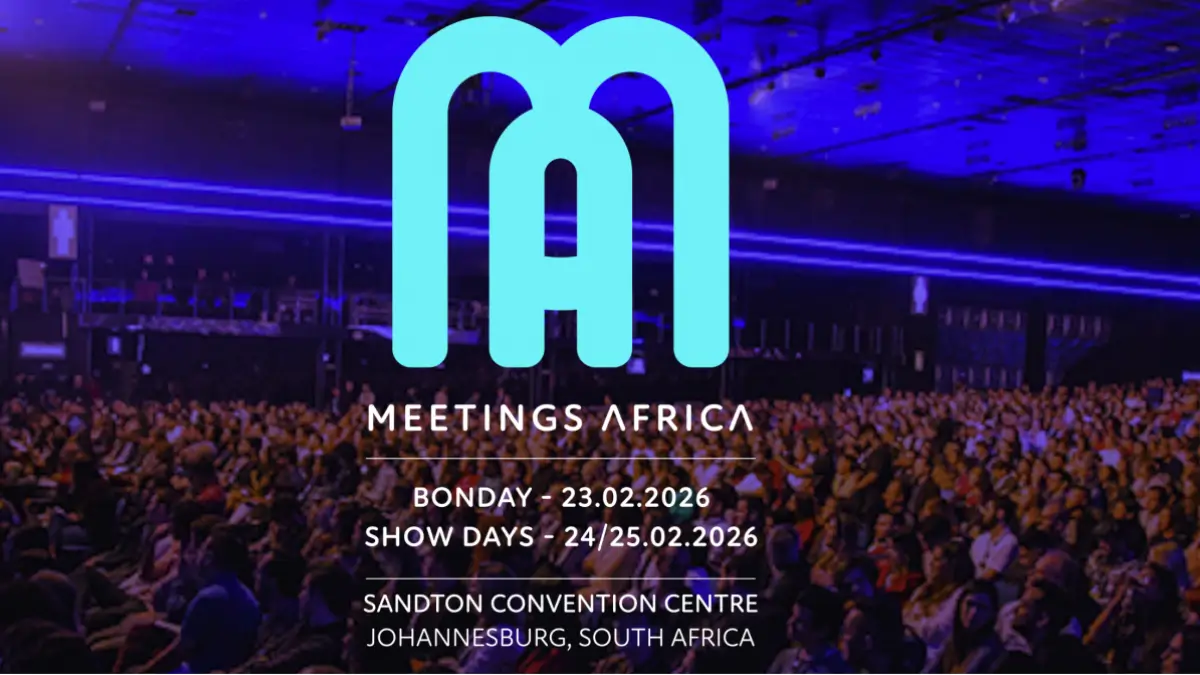
Gauteng is preparing to host a milestone edition of one of Africa’s most important trade events, with Meetings Africa 2026 confirmed for late February at the Sandton Convention Centre. Marking its 20th anniversary, the event is expected to build on the strong commercial outcomes recorded in 2025 while reinforcing Gauteng’s position as the continent’s leading business events gateway.
Meetings Africa has evolved beyond a conventional trade show. It functions as a strategic pipeline for tourism, investment, and long-term conference hosting across the continent, with Gauteng as its base. For the province, the return of the event in 2026 signals continuity, credibility, and growing confidence in its ability to host high-impact global gatherings.
ALSO READ: Gauteng Sets the Pace for Global Business and Meetings in 2026
What Meetings Africa Means for Gauteng’s Visitor Economy
Hosted by Meetings Africa in partnership with national and provincial tourism bodies, the event connects African business events products with international buyers looking to place conferences, incentives, and exhibitions on the continent.
For Gauteng, this positioning matters. Business events attract higher-spending visitors, longer stays, and repeat travel. Unlike leisure tourism, meetings tourism directly feeds into hotels, venues, transport providers, production companies, destination management companies, and small service suppliers.
In 2025, that value was visible both on the trade floor and in the broader provincial economy.
Meetings Africa 2025 by the Numbers: A Strong Performance Baseline
The 2025 edition of Meetings Africa, held from 24 to 26 February, delivered one of its strongest performances to date. According to official event data, the show hosted 410 exhibitors, including 113 SMMEs, confirming the depth of Africa’s business events supply market.
Buyer demand remained robust, with more than 320 buyers attending from global source markets. Most importantly, interest translated into action. Over 8,000 confirmed meetings were recorded during the event, demonstrating that Meetings Africa continues to convert engagement into structured deal-making rather than surface-level networking.
The national government publicly acknowledged the role of partners such as the Gauteng Tourism Authority, Johannesburg Tourism, and the Sandton Convention Centre, reinforcing Gauteng’s reputation as a trusted host destination for international business events.
Why Those Numbers Matter Beyond the Exhibition Floor
Meetings Africa operates in two economic layers for Gauteng.
The first is immediate event-driven spend. Buyers, exhibitors, and delegates contribute directly to the local economy through accommodation, transport, dining, venues, technical services, and staffing. Gauteng government reporting shows that hosted signature events contributed more than R1.8 billion in direct economic impact during the 2024/25 financial year, positioning events as a core driver of tourism revenue.
The second layer is medium- to long-term tourism growth. Business events influence future travel decisions. Gauteng recorded more than 3.8 million international arrivals in 2024/25, with foreign direct spend of approximately R41 billion, well above initial targets. Domestic travel also remained strong, generating an estimated R21 billion from 6.4 million trips.
Meetings Africa feeds into both layers by creating repeat visitation opportunities and anchoring Gauteng in international conference calendars.
Voices from the 2025 Event Floor
Opening the 2025 edition, Professor Gregory Davids, Chair of the South African Tourism Board, framed Meetings Africa as a platform for narrative control and economic agency.
“Every event we host is an opportunity to showcase our collective strength. For too long, others have controlled our story. Today, we take ownership of our narrative. This is a story of strength and resilience,” Davids said.
That sentiment was echoed by His Excellency Albertus Aochamub, Namibian Ambassador to France, who highlighted Africa’s shift from aid-based engagement to trade-driven partnerships.
“A thriving Africa strengthens the global economy. We are a young, skilled population looking for trade, not aid,” he said.
During a high-level plenary session, leaders including Gauteng Tourism Authority CEO Sthembiso Dlamini and South African Tourism CEO Nombulelo Guliwe emphasised the sector’s role in inclusive growth and job creation.
“Meetings Africa is deeply rooted in fostering connections and promoting business events across the continent. Our commitment extends to ensuring an inclusive industry that benefits all players, from small businesses to large enterprises,” Guliwe said.
What to Expect from Meetings Africa 2026
The 2026 edition introduces several structural and strategic shifts that raise expectations for Gauteng’s tourism sector.
The event will open with BONDay on 23 February 2026, followed by trade show days on 24 and 25 February, again hosted at the Sandton Convention Centre. As a 20th-anniversary edition, organisers have positioned Meetings Africa 2026 as a landmark moment with increased participation and heightened media attention.
Planning has also been strengthened through a multi-stakeholder advisory panel appointed by South African Tourism, signalling a sharper focus on buyer quality, improved matchmaking, and stronger post-event outcomes.
Importantly for Gauteng, Johannesburg has secured Meetings Africa as host city for five consecutive years from 2026 to 2030. This long-term hosting runway creates stability and allows provincial and city partners to refine delivery, build supplier readiness, and grow the event’s economic footprint year-on-year.
Expected Benefits for Gauteng in 2026
With the foundation laid in 2025, Gauteng Tourism and its partners are expected to demonstrate tangible outcomes in 2026. These include longer international buyer stays, increased local procurement across the events supply chain, stronger SMME participation linked to real contracts, and more bid opportunities for future conferences secured through relationships formed at the show.
The broader expectation, set by national leadership, is that flagship events like Meetings Africa should translate into measurable economic opportunity and job creation, not only promotional value.
A Strategic Moment for Gauteng Tourism
As Meetings Africa enters its third decade, the focus for Gauteng shifts from hosting capacity to long-term optimisation. The province now holds a rare advantage: consistent hosting rights, established credibility, and a proven ability to convert trade engagement into economic value.
With Meetings Africa 2026 on the horizon, Gauteng stands at the centre of Africa’s business events ecosystem, not only as a venue, but as the place where continental deals begin, partnerships form, and future travel decisions take shape.
